NYC Emergency Management: disability preparedness. Build a personal support network and emergency plan.
Important safety · family guide
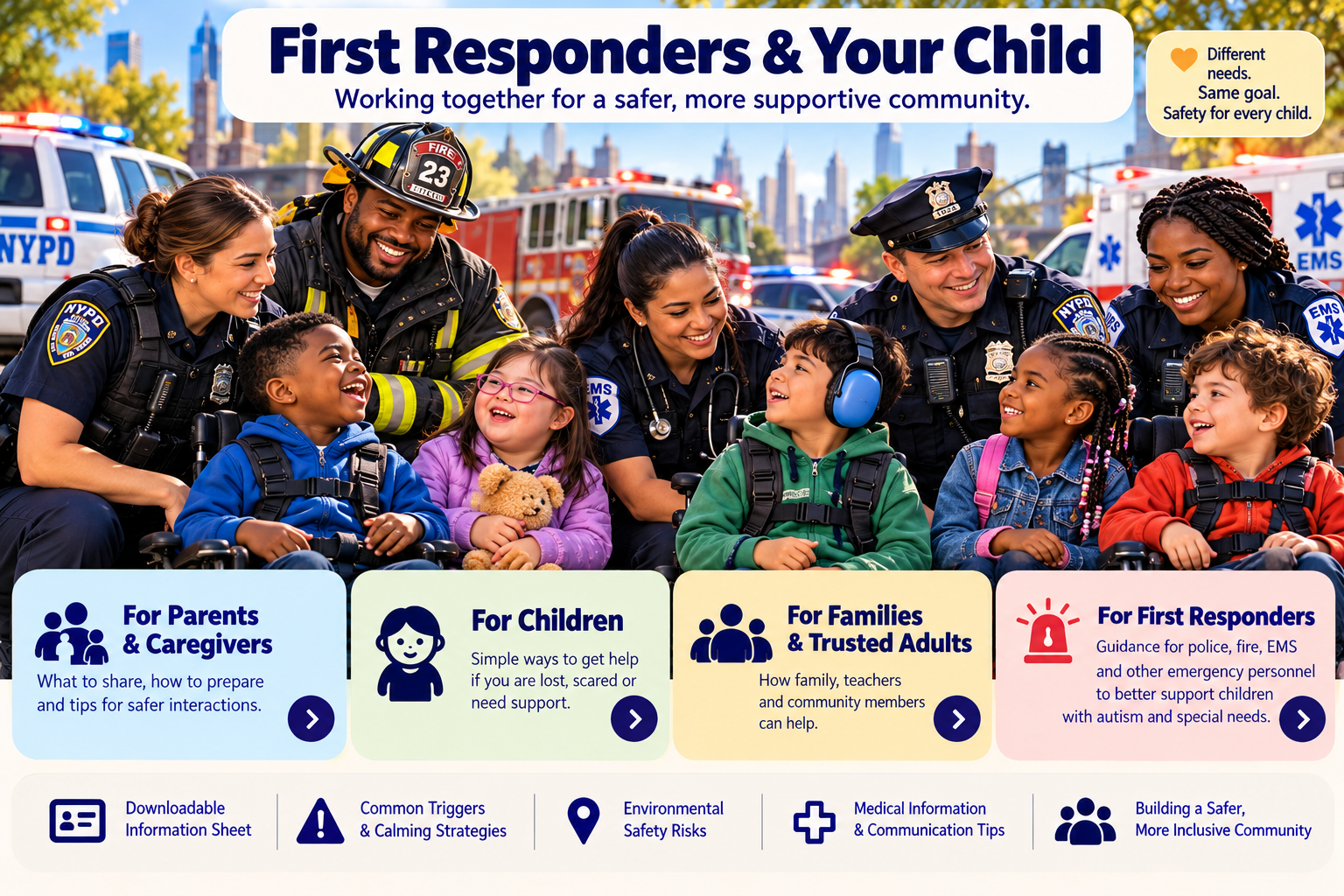
First Responders & Your Child
Make it easier for the people helping your child to understand how your child communicates, what may be frightening, and what works. Adapt every step to your child. In an immediate emergency, call 911.
Prepare the details before you need them
Keep a current full-body photo, clothing description, emergency contacts and a private child profile on your phone. Include communication method, whether your child speaks or responds to their name, sensory triggers, calming strategies, favorite objects, wandering history, attraction to water or transit if relevant, medical needs, and tracker details. Update the profile when anything changes.
Example for 911: “My child is autistic and nonspeaking. He may not respond to his name or follow verbal directions. He may run if approached quickly. One calm person speaking at a time works best.”
Change that script to fit your child. Tell the dispatcher immediately about any known pull toward water, trains, traffic, or another hazard. Share the child’s last location and photo. A registry or GPS device never replaces a 911 call.
Practice finding a trusted helper
Use pictures, modeling, role play or a communication device when those fit your child. Practice a few useful messages:
I am lost.I need help.Call my caregiver.Here is my ID.
Point out recognizable helpers together: police, firefighters, EMTs, crossing guards, transit employees, security staff, teachers, and identifiable workers. Practice showing an ID card, bracelet or device. A child who cannot use these steps still needs an adult-led safety plan; do not assume the child can ask for help.
Give everyone the same clear plan
Siblings, grandparents, babysitters, respite workers, school staff and other trusted caregivers should know where the current photo and private profile are stored, who calls 911, who watches exits and nearby hazards, and who can share a tracker location. Keep backup contacts current. Practice what to do if the child wanders from home, school, a bus, camp or an outing.
Share only the information each caregiver needs. Store full medical and contact details privately, not on a public post.
Consider communication and sensory needs
An autistic or nonspeaking child may not respond to their name, make eye contact or follow verbal commands; may need more processing time; may run, hide, repeat sounds, move toward danger, or be overwhelmed by sirens, lights or unexpected touch. They may be unable to give a name or address or communicate pain and fear in a familiar way. These responses should not be assumed to be deliberate noncompliance.
When circumstances permit, use one calm speaker and short directions, allow processing time, reduce unnecessary lights and sirens, avoid unnecessary contact, ask a caregiver what helps, and look for ID or communication information. This applies to police, fire, EMS, traffic and transit personnel, school safety, security and community responders.
Search the places that matter for this child
Water
Pools, ponds, lakes, rivers, beaches, bays, marinas, reservoirs, waterfronts and fountains. Some autistic children are strongly attracted to water; many are not.
Rail and transit
Subways, LIRR, Metro-North, railroad tracks, platforms, stations and crossings.
Roadways
Streets, highways, parkways, expressways, bridges and parking areas.
Other places
Parks, woods, trails, schools, malls, stores, hospitals, arenas, events and unfamiliar buildings. These risks exist across all supported counties, not just cities.
Programs and emergency contacts by area
Ask each program about eligibility, enrollment and current availability. These programs have different purposes; none guarantees a search or replaces 911.
Nassau REACH and Project Lifesaver information. Confirm current enrollment with county police.
Suffolk Office of Emergency Management. Ask about current disability preparedness and local police contacts.
Westchester Department of Emergency Services. Ask your local police and emergency management office about any current voluntary program.
Access & Functional Needs Registry for emergency planning and evacuation notification.
Putnam Text-to-911 when a voice call cannot be made. Call 911 if you can; do not assume a child can text independently.
Orange County 911 Registry / Project Lifesaver for eligible people at risk of wandering.
NJ Register Ready is a statewide special-needs registry for disaster planning and response. It is voluntary and confidential; registration does not guarantee assistance and does not replace 911. Ask your local emergency management office about additional community programs.
First Responder Information Sheet
Fill in a copy privately. Use your browser’s Print / Save as PDF option for a downloadable copy. Keep it updated and share only with people who need it.
Child’s name and current photo:
Caregiver and backup contacts:
Communication and name response:
Approach that works / triggers:
Favorite calming item or interest:
Medical needs and important instructions:
Wandering and known hazards:
Tracker / last known location details: